Makoba Island Camp
Launching 2027
The Okavango. Reimagined.
Makoba Island feels removed from the world beyond it.
Surrounded by seasonal floodplains and shifting channels, the island offers a rare sense of containment within vastness. Water defines the horizon in some months, open grassland in others. The experience changes with the Delta’s rhythm, and no two seasons feel the same.
Days unfold slowly. Early light spreads across misted floodplain as elephant move between islands. Game drives explore the shifting edges where predator and prey intersect. Midday brings stillness and open sky. Evenings settle into soft lantern light and the distant sound of hippo from the water’s edge.
With only three tents, privacy is inherent. Space is uninterrupted. The camp does not compete with its surroundings. It rests within them.
Makoba is not dramatic in a loud way. It is immersive in a quiet one.
It is a place where water, land and sky meet.
Where movement follows season.
And where the Delta is experienced from within, not from its edge.
The Experience
Where Water Shapes the Wild.
The Camp
Luxury in the last Frontier
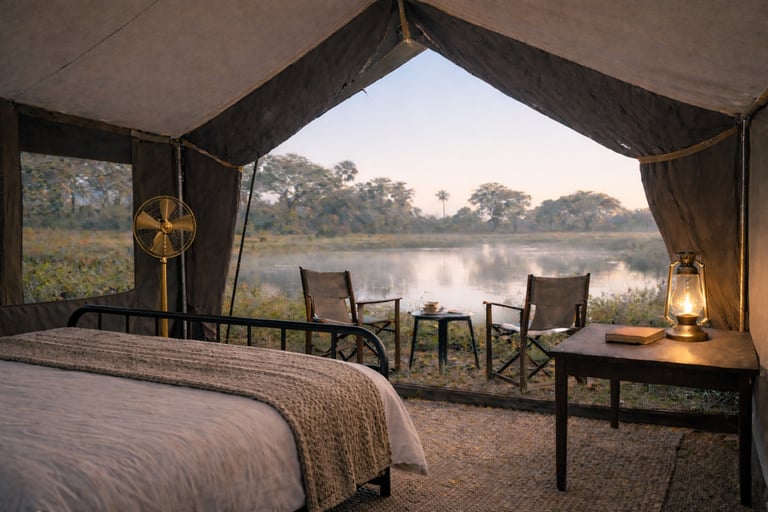
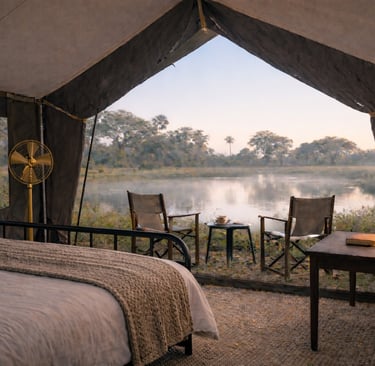
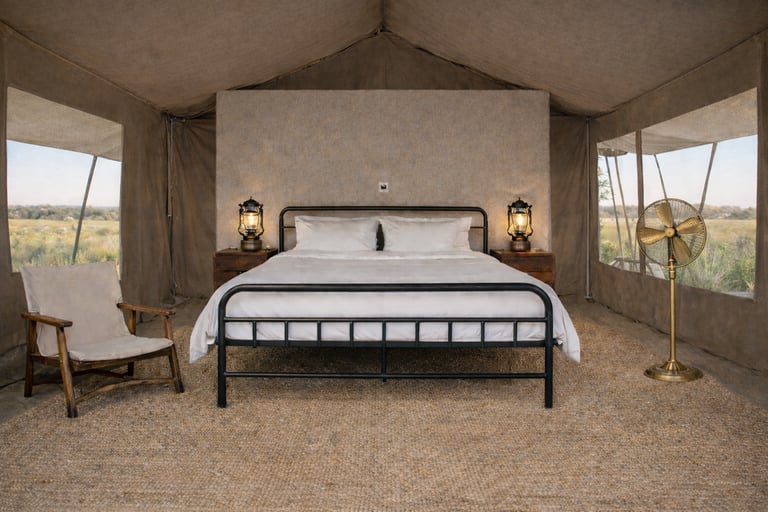
Makoba Island consists of just three guest tents, positioned with deliberate distance between them to preserve privacy, quiet and uninterrupted views across the surrounding floodplains.
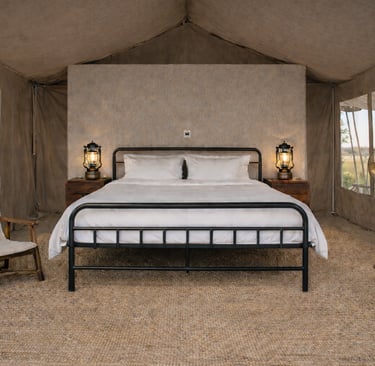
Each tent is constructed in classic Meru style, interpreted through a refined campaign minimal aesthetic suited to the Delta environment. Interiors are composed rather than decorative, shaped by natural textures, steel expedition bed frames and carefully considered lighting. Comfort exists in balance with place, never overwhelming the landscape beyond the canvas.
Each tent features an ensuite bathroom with hot gas heated showers and flushing toilets, offering considered comfort while maintaining the integrity of a light footprint camp.
The camp operates entirely on solar power, ensuring quiet and low impact functionality from morning through evening. All infrastructure is fully removable, allowing the island to return to its natural state as water levels shift and seasons evolve.
Set lightly within the NG35 concession, Makoba Island feels both secluded and fluid. The scale remains intentionally restrained. Space defines the experience as much as design. Space between tents. Space between structures. Space for water, wildlife and horizon to remain the dominant presence.
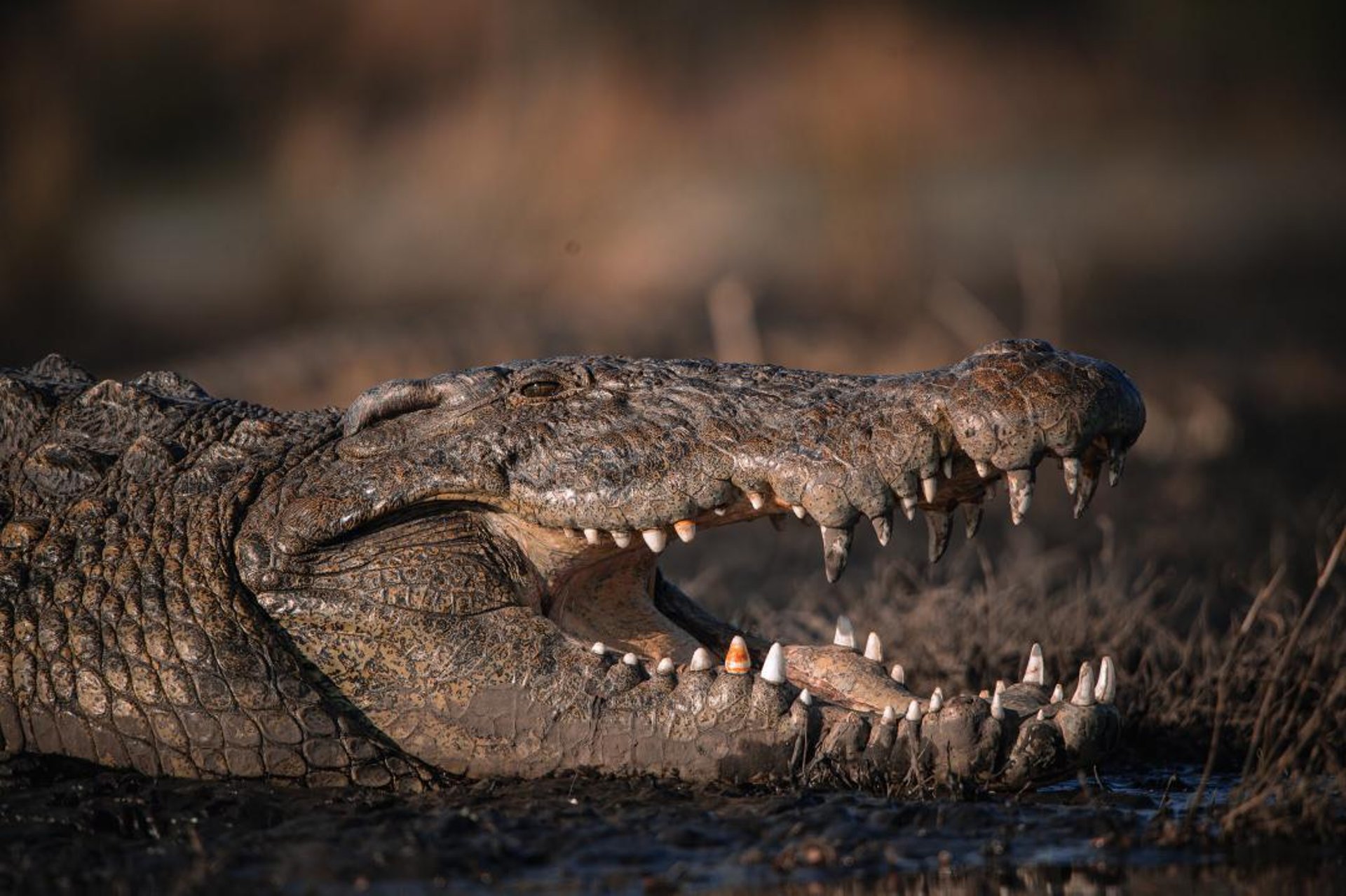
Where Stillness Has Teeth.
Time in The wilderness
Across floodplain and forest, the story unfolds.
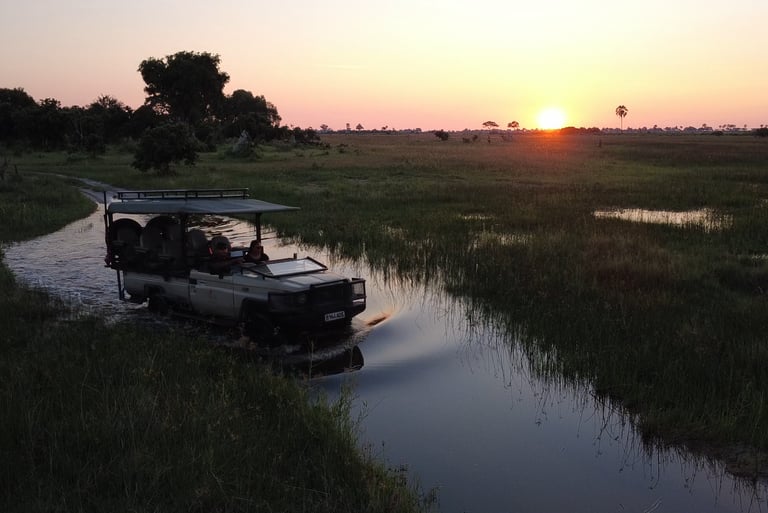
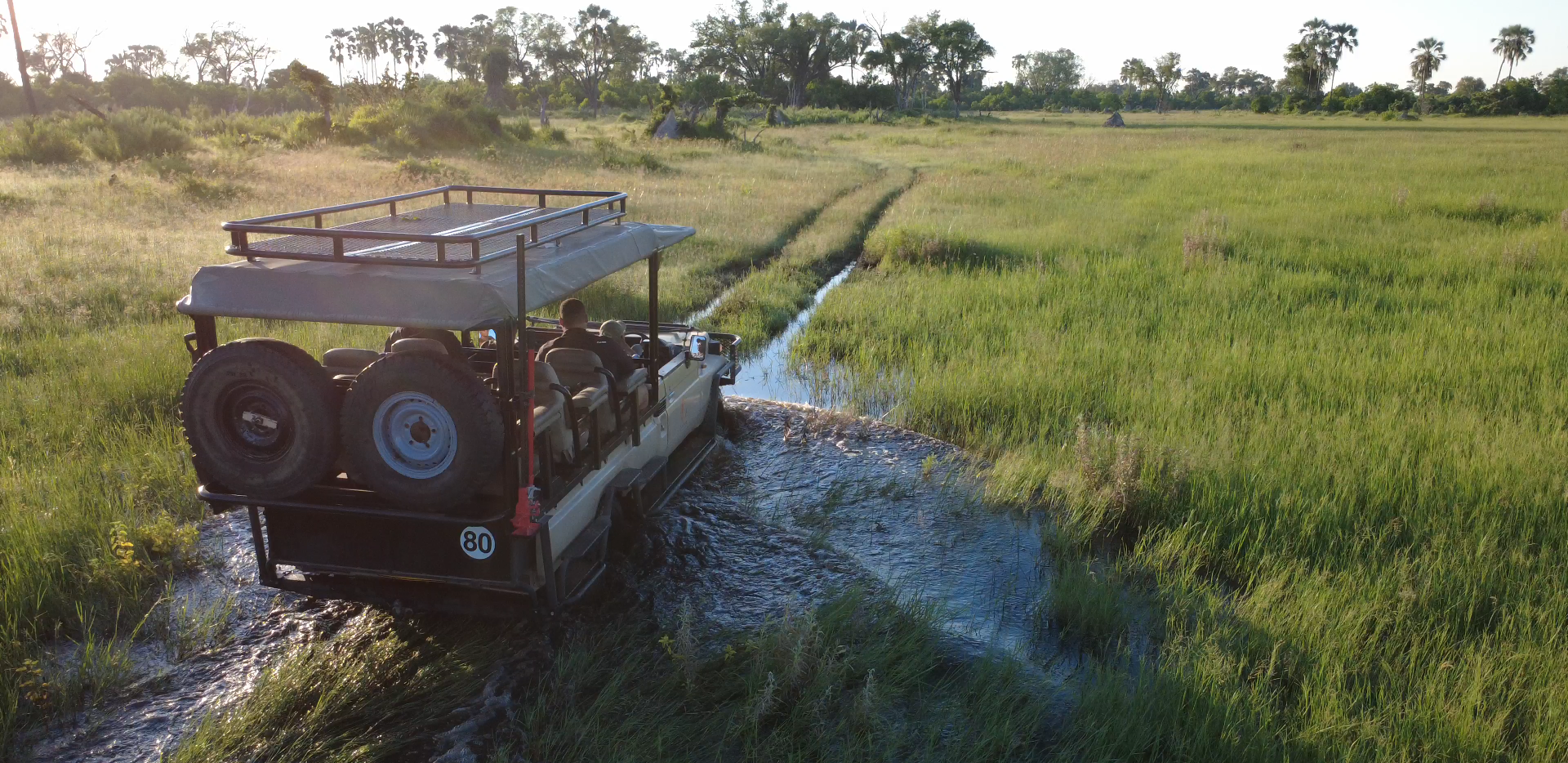
Game drives move through a landscape shaped by water and seasonal change. In higher flood, wildlife concentrates along the edges of permanent channels and island margins. In drier periods, open plains stretch outward, drawing herds and predators into wider movement.
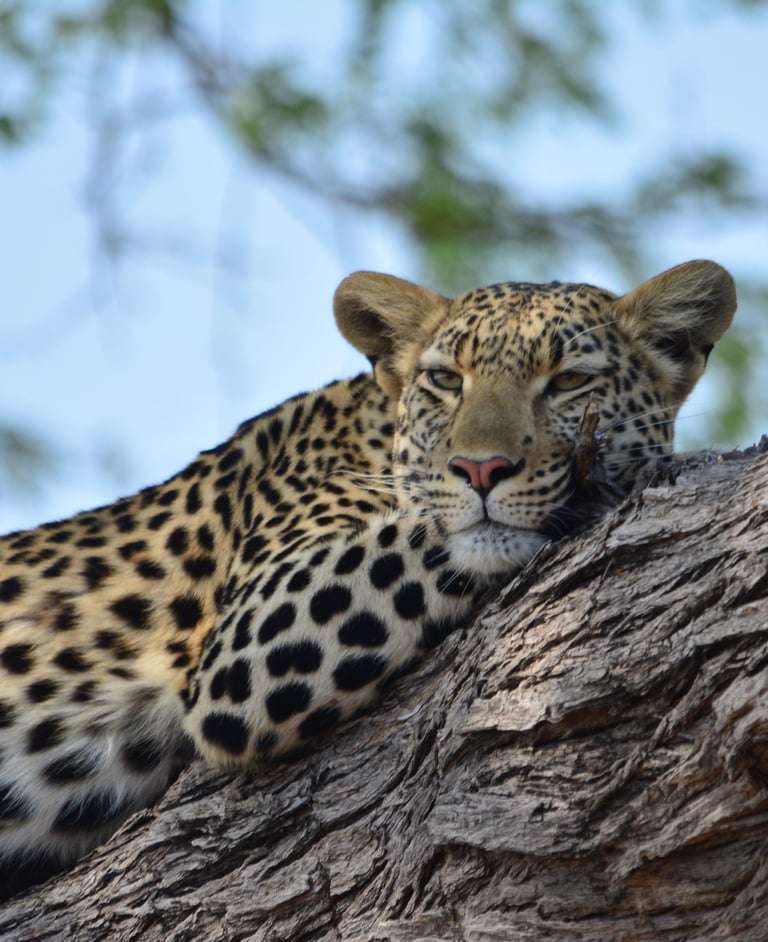
Elephant traverse between islands. Lion patrol floodplain corridors. Leopard move quietly through riverine forest. The terrain shifts subtly with light and water level, making each drive feel dynamic rather than predictable.
Here, driving is not about covering distance. It is about understanding how the Delta breathes, and positioning carefully within its rhythm.
Silence at water level.
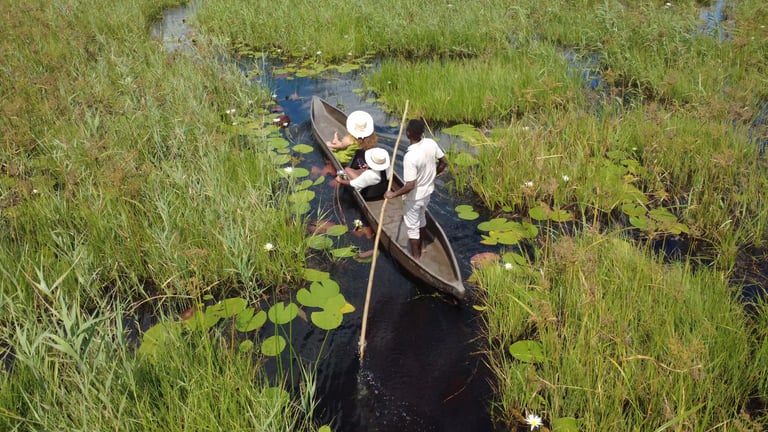
A mokoro excursion from Makoba Island brings you to water level, where the Delta reveals its quieter detail.
Gliding silently through narrow channels, you move between reeds and water lilies, guided by an experienced poler who reads depth, current and movement instinctively. The pace slows. Birdlife gathers overhead. Frogs call from hidden banks. The surface of the water reflects sky and island in equal measure.
From this perspective, the Delta feels intimate rather than vast. You notice the texture of papyrus, the subtle ripple of fish beneath the hull, the distant shape of hippo in still lagoons.
The mokoro is not about distance covered.
It is about immersion.
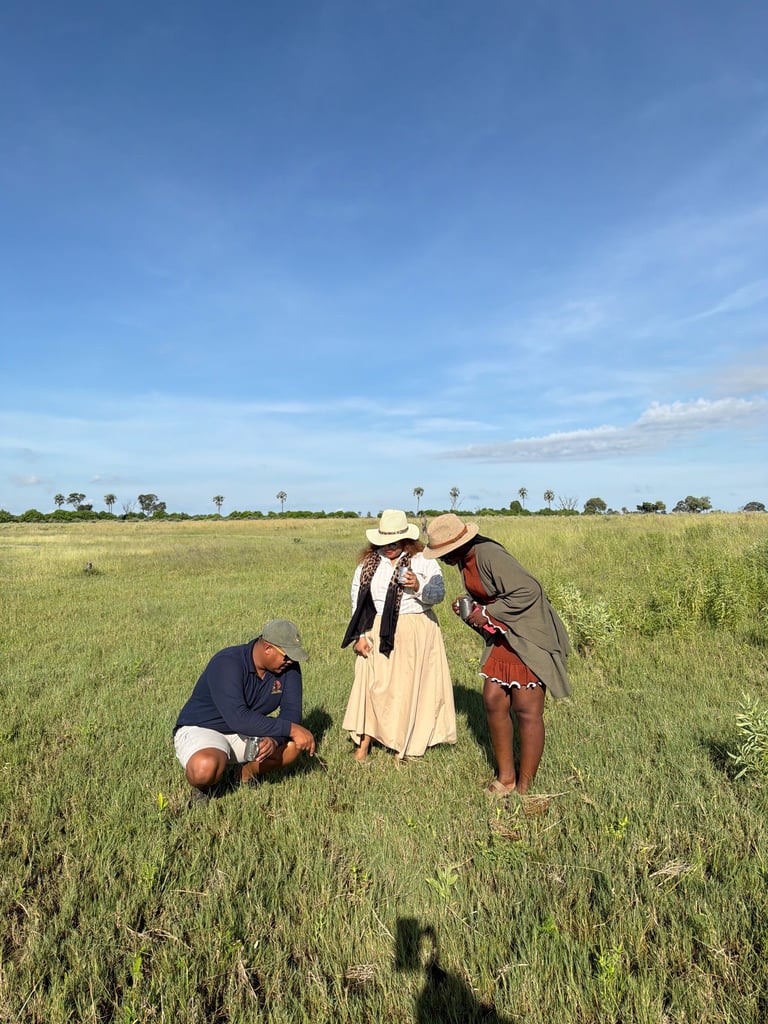
On foot, the landscape becomes immediate. Distances shorten. Detail sharpens. You begin to notice spoor pressed into damp sand, the scent of crushed wild sage beneath your boots, the direction of wind across open floodplain. Every sound carries meaning.
Guided by a professionally licensed Botswana guide, the focus shifts from sightings to understanding. Elephant tracks reveal recent movement between islands. Predator spoor suggests territory and timing. Bird calls signal presence long before it is seen.
Walking safaris are measured and deliberate. They are not about covering ground, but about interpreting it. The Delta, experienced at ground level, feels textured and alive in a way no vehicle can replicate.
Here, you do not pass through the wilderness.
You stand within it.
The wilderness, step by step.
Leon Safaris
Botswana
Refined mobile safaris across Botswana.
Explore
Our Standard
Enquiries
Reservations@leonsafaris.com
Botswana