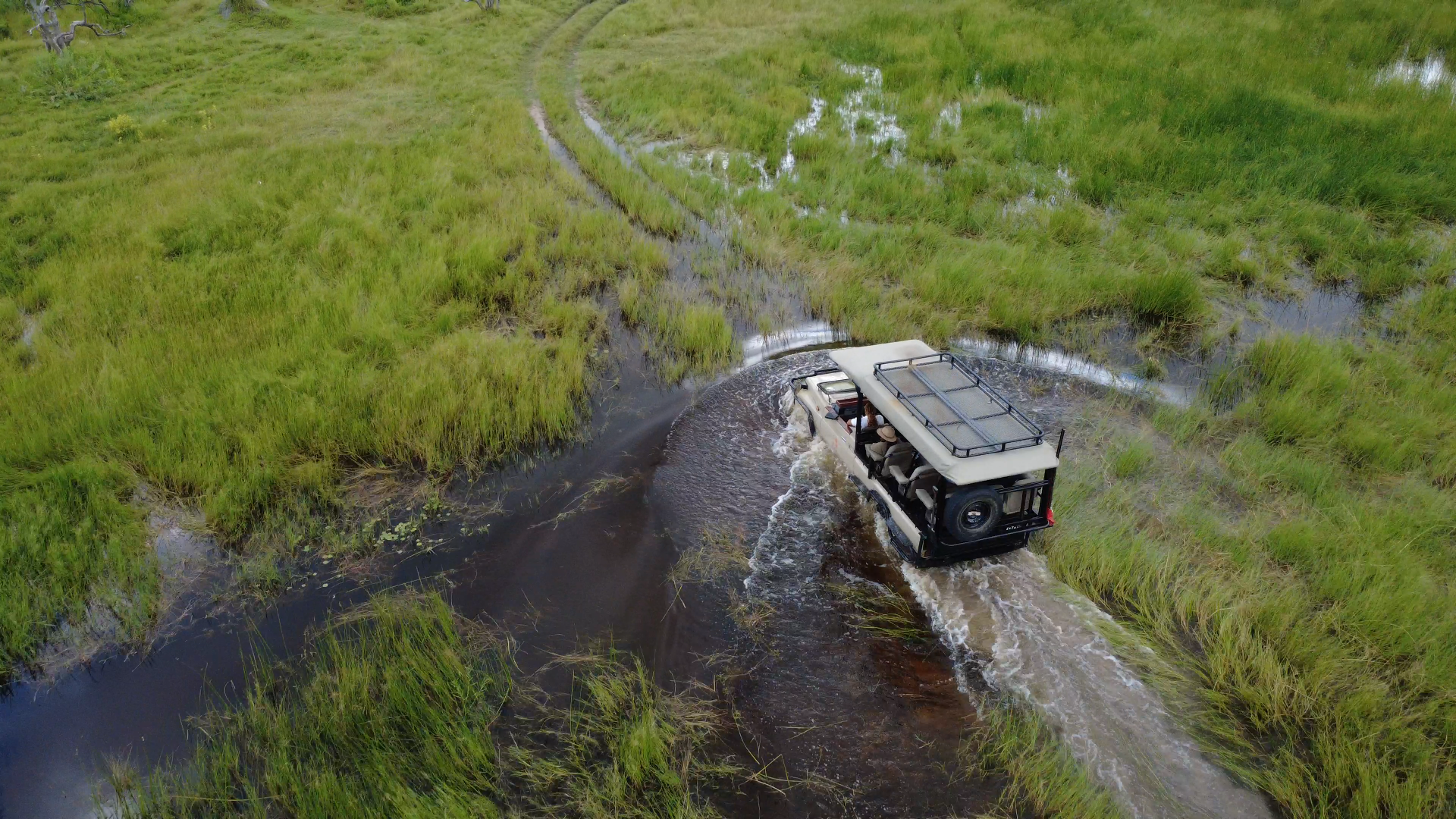
Knowledge Shaped by Experience.
Guided by Instinct.
Guiding
The Art of Interpretation.
At Leon Safaris, we believe guiding is not narration. It is interpretation.
The African wilderness does not need to be dramatized. It is already layered with meaning. Every track pressed into sand, every alarm call in the distance, every subtle shift in wind direction tells a story that has been unfolding long before we arrive. The role of a guide is to understand that story and reveal it with clarity and restraint.
True guiding begins with listening. Listening to the rhythm of a landscape at dawn. To the difference between casual movement and intent. To the silence that settles before something significant happens. It is built on years of field experience across Botswana’s ecosystems, where season, water levels and migration patterns constantly reshape the terrain.
Interpretation requires discipline. It demands patience over pressure and depth over display. It means allowing a sighting to unfold naturally rather than forcing proximity. It means knowing when to explain behaviour and when to step back and let the moment speak for itself.
Our guides are not performers. They are professionals. Formally trained, deeply experienced and grounded in ethical practice, they approach every drive with awareness and responsibility. They read the land, anticipate movement and position thoughtfully so that encounters feel immersive yet respectful.
The result is a safari that feels measured, intelligent and deeply connected to place. Not louder. Not closer. Simply more understood.
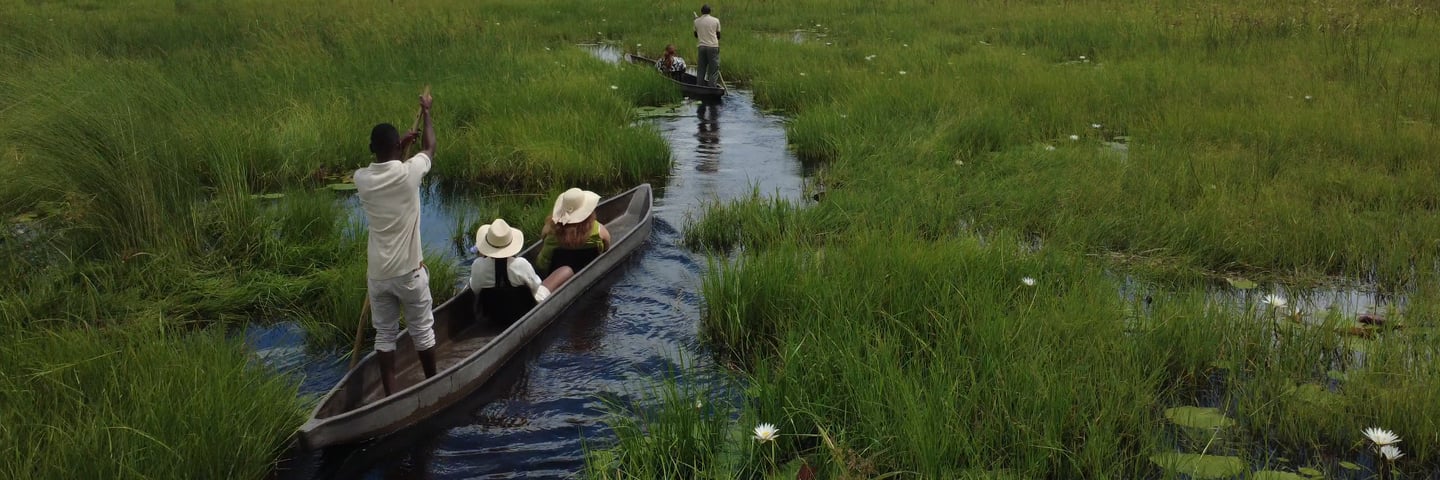
Where Knowledge Meets Stillness.
Our Philosiphy
Reading the Land
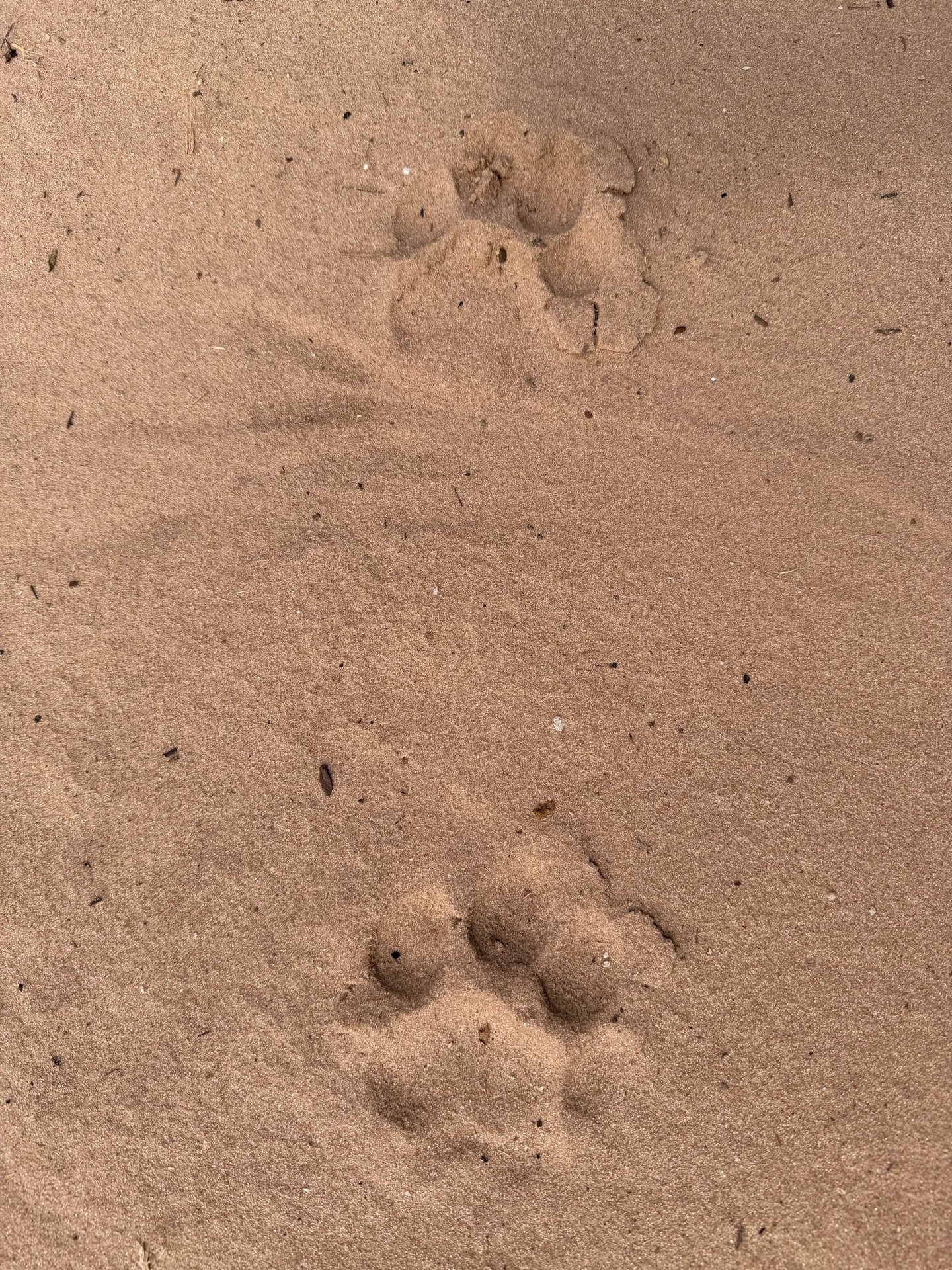
To read the land is to notice what others pass by.
A guide studies the faint edge of a track in cooling sand. The direction of wind across open plain. The tension in a herd that has sensed something unseen. A distant alarm call carried differently through woodland than across floodplain. Nothing is random. Everything leaves evidence.
The depth of a spoor reveals pace. The sharpness of its outline reveals time. Broken grass suggests movement before the animal is ever visible. In Savuti, drying channels reshape territories. In Khwai and Xakanaxa, rising water redraws invisible boundaries. The landscape is constantly speaking.
True guiding is the discipline of listening.
When you understand how water, season and behaviour interconnect, a drive is no longer a search. It becomes a quiet unfolding. You move with probability, not urgency. You anticipate rather than react.
Reading the land is not a technique. It is a relationship built over years.
And when that relationship is strong, the wilderness does not surprise you loudly.
It reveals itself quietly.
Respecting the Wild

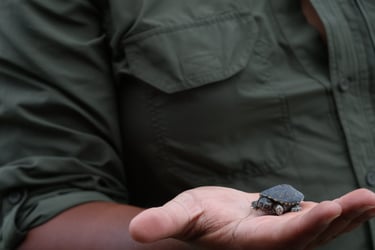
To interpret the wild is to understand when to observe and when to engage.
Most of the time, interpretation requires distance. Reading posture, movement and environment allows us to position carefully and allow behaviour to unfold naturally. The goal is never to interfere, but to understand.
There are moments, however, when closer interaction becomes a powerful tool for learning. A guide holding a tortoise to explain its markings, age or adaptation is not spectacle. It is education. It is context. It is an opportunity to connect knowledge with experience in a way that deepens appreciation rather than diminishes it.
Such interactions are always measured and responsible. They are brief. They are handled with care. They are guided by training and ethics. The welfare of the animal remains paramount.
Interpretation means recognising the difference between intrusion and insight.
When distance protects behaviour, we hold back.
When engagement enhances understanding without harm, we explain.
In both cases, the purpose is the same.
To leave the wild unchanged, and the guest changed.
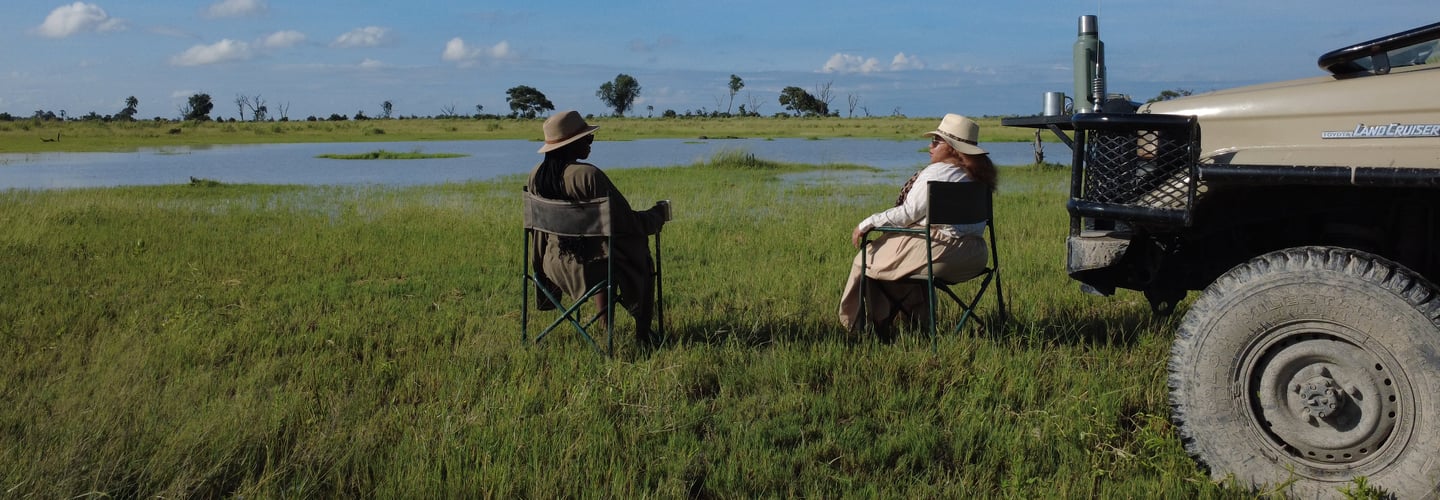
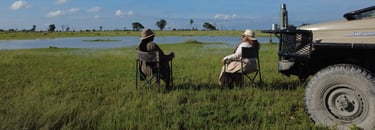
Great guiding is not only about reading the land. It is about reading the people within it.
Every guest arrives with a different rhythm. Some seek depth and detail, wanting to understand territorial ranges, migration cycles and behavioural nuance. Others seek stillness, content to sit in silence as the sun lifts over the floodplain. A skilled guide senses this without being told.
Interpretation extends beyond wildlife. It includes energy levels at dawn, curiosity during a sighting, the quiet shift in mood when a moment becomes meaningful. The guide adjusts naturally. Explaining when explanation adds value. Remaining silent when silence deepens the experience.
Small group departures make this possible. With fewer voices, there is space for conversation that feels personal rather than rehearsed. Questions are explored properly. Moments are not rushed to satisfy a crowd.
Understanding the guest also means managing expectation with honesty. The wilderness cannot be scripted. Some days are dramatic. Others are subtle. A professional guide prepares guests to appreciate both, to recognise that a fleeting leopard sighting and an hour watching elephant interact can hold equal significance.
When a guide understands both the ecosystem and the individual, the safari becomes balanced. Not overwhelming. Not underwhelming. Simply aligned.
The result is an experience that feels considered, personal and quietly profound.
Understanding the Guest
Leon Safaris
Botswana
Refined mobile safaris across Botswana.
Explore
Our Standard
Enquiries
Reservations@leonsafaris.com
Botswana